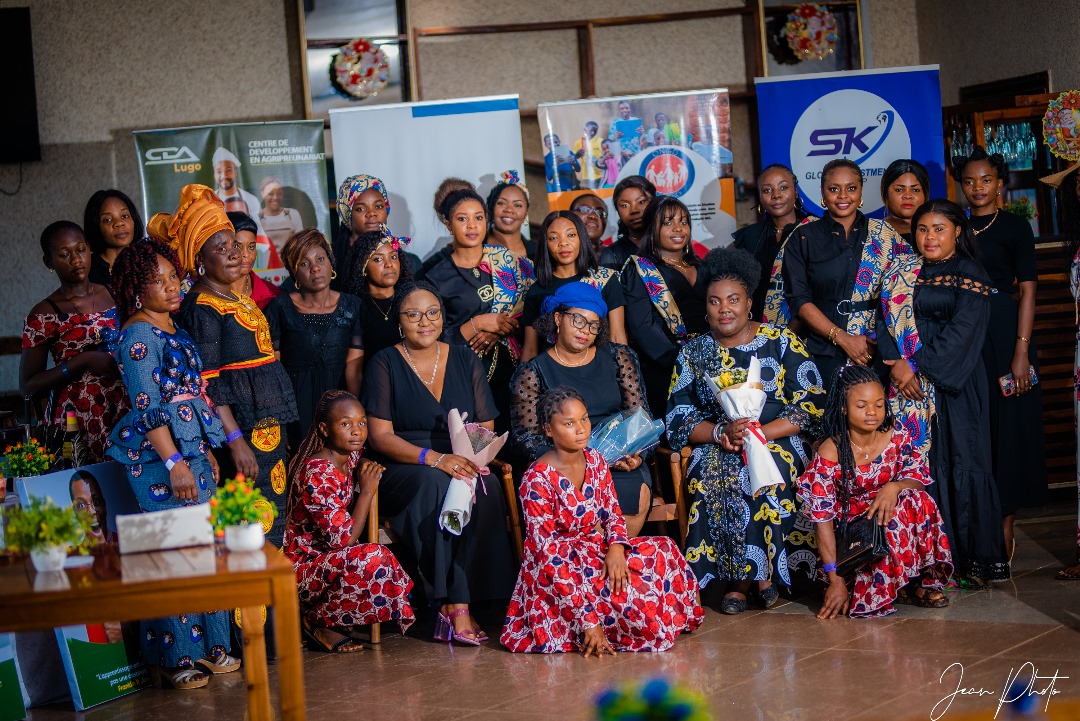
L' ong adepesidi a organisé une journée de réflexion en date du 19/04/2024 sur le thème: "Accroître les ressources nécessaires en faveur des femmes et des filles dans la paix pour un Congo paritaire", afin de susciter aux femmes l' intérêt de s' intégrer dans la prise en charge et l' autonomisation dans différentes branches.
Visualizzazione post con etichetta INTEGRATION. Mostra tutti i post
domenica 21 aprile 2024
ADEPESIDI. EDUCATION A LA PAIX
Etichette:
autonomie,
Congo,
INTEGRATION,
pix,
travail
sabato 28 luglio 2018
SOUTH SUDAN - The Comboni nuns are committed to education, integration and religious coexistence
The future of the country is in the hands of
the new generations and a good preparation, not only academic, is the
basis for building a society that respects the common good. This is what
Sister Freweini Ghebreab, a Comboni missionary, contact person of the
Omdurman's "Comboni Girls School" project, explains in a note sent to
Agenzia Fides. In the city, which is a few kilometers from Khartoum,
there are many displaced families, who returned back to the North due to
the unrest and conflicts in South Sudan.
The aim of the "Comboni Girls School" is to guarantee an integral education that confirms the dignity of the person and gives security in life, as well as preparing them at an academic level, so that they can better understand their role in society and in the family. The school is attended by schoolgirls and Christian and Muslim students, aged between 5 and 17, about 100 primary school students and 25 high school students are helped to pay the annual school tuition, uniform and teaching material. The Comboni missionary nuns, who have been carrying out this activity for almost 100 years, offer the possibility of education for girls in the city and suburbs, believing that education is a right for everyone, poor and rich.
Already in May 2017, the Comboni missionaries had launched the "Education in Omdurman" project to "foster culture and increase the dignity of a people in living the human and Christian values of freedom, justice and human dignity". The project is aimed at poor families who do not have the money to send their daughters to school. Because of the war in South Sudan, in fact, many Christian families are fleeing to the North, looking for a Christian school for their children. (FG/AP) (Agenzia FideS)
The aim of the "Comboni Girls School" is to guarantee an integral education that confirms the dignity of the person and gives security in life, as well as preparing them at an academic level, so that they can better understand their role in society and in the family. The school is attended by schoolgirls and Christian and Muslim students, aged between 5 and 17, about 100 primary school students and 25 high school students are helped to pay the annual school tuition, uniform and teaching material. The Comboni missionary nuns, who have been carrying out this activity for almost 100 years, offer the possibility of education for girls in the city and suburbs, believing that education is a right for everyone, poor and rich.
Already in May 2017, the Comboni missionaries had launched the "Education in Omdurman" project to "foster culture and increase the dignity of a people in living the human and Christian values of freedom, justice and human dignity". The project is aimed at poor families who do not have the money to send their daughters to school. Because of the war in South Sudan, in fact, many Christian families are fleeing to the North, looking for a Christian school for their children. (FG/AP) (Agenzia FideS)
Etichette:
Comboni Missionaires,
education,
INTEGRATION,
school,
South Sudan
mercoledì 21 febbraio 2018
Refugee integration policy needs concerted effort
The need for concerted efforts at
national and international levels to effectively integrate refugee
children into education was highlighted at a seminar hosted by Education
International. The seminar also focused on the need for action in
education policy to reduce the risk of a lost generation of children.
Europe has a key role in promoting the inclusion and
future prospects of newcomers. That was the message at an event in
Brussels, Belgium, attended by academics, union delegates, and
stakeholders. The event, held at the European Economic and Social
Council (EESC), was organised by Education International (EI), the
global education federation. It aimed to highlight what member states
must do to effectively create opportunities and hope for newcomers
through education.
The meeting also included the launch of the publication, ‘Education: Hope for Newcomers in Europe’, by Nihad Bunar, Dita Vogel, Elina Stock, Sonia Grigt, and Begoña López Cuesta. Martin Henry, EI research coordinator, summarised the key findings of the study.
Role of Europe and education
Public education has a significant role in the inclusion of refugees
in their host societies, according to speaker Mario Soares of the
workers’ group at the EESC. He highlighted the risk of producing a lost
generation if refugee children were not integrated into national school
systems. Europe has a key role in promoting the inclusion of newcomers
and migrants can enrich host societies, he said.
National governments must ensure that education curricula are
tailored to the needs of all children, teachers are trained accordingly,
and resources are allocated appropriately, said Haldis Holst, EI Deputy
General Secretary. “The integration of newcomers and refugees is a
political, economic, and social challenge,” she added.
Social partners
Attendees also heard how social partners in education also have a
role in making demands of policy makers. Susan Flocken, European
Director of EI’s European Council (ETUCE), highlighted the case in the
European Union, where ETUCE participates in negotiations with
governments and employers. She also stressed the role of education in
fostering democratic citizenship and countering right-wing extremism.
Flocken highlighted the ETUCE resolution on migration that focuses on
the recognition of migrant skills and qualifications. In addition, she
said that, after education, newcomers would integrate into host
countries’ labour force – and be supported by trade unions.
More needed
The seminar also heard from Denitsa Sacheva, Deputy Minister of
Education and Science of Bulgaria, who said that Bulgaria was exploring
an integrated approach to the education of refugee children. However,
many newcomers are still outside of the education system or have only
attended school briefly. She reasserted the need for psychological
support of newcomers and their families, but also for the professional
development of teachers.
Plenary sessions brought together academic and political perspectives
and provided an opportunity to align actions at different levels to
foster positive change. Teachers and education unionists also
highlighted the need to listen to the actors on the ground in order to
effect positive change for students.
Read: REFUGE INTEGRATION
English French Spanish German Russian Arabicvenerdì 5 maggio 2017
TOWARDS A PARTICIPATORY SOCIETY: NEW ROADS TO SOCIAL AND CULTURAL INTEGRATION
THE PONTIFICAL ACADEMY OF SOCIAL SCIENCES
Plenary Session 28 April-2 May 2017 – Since the
beginning of his Pontificate, Pope Francis has asked our Academy to give more
attention to the poor, the marginalized, the sick, the suffering, and to make a
renewed commitment to fight all forms of social marginalization and exclusion.
This Plenary will respond to his call by seeking to deepen our understanding
and explanation of the reasons for social exclusion and, above all, to suggest
practicable steps for promoting a thorough-going social and cultural
integration, which we have termed the ‘participatory society’. Unlike other
meetings that are focused on particular problems, this Plenary will address the
topic from the broadest vantage point, emphasizing new ways to promote the full
participation of people in society, meaning participation in all spheres of
civil and political society.
The aim is not only to make the current
structure of societies more participatory, but also to outline the
characteristics of a participatory society capable of promoting the dignity of
the human person in a context oriented to the common good and based on the
principles of subsidiarity and solidarity. One aspect has to do with
dissatisfaction with existing ideas for progressive social transformation that
are incapable of avoiding recurring processes of exclusion and marginalization
of entire populations, generations and social groups on a world scale. The
other aspect is the need to develop a genuine concept of participation in
social life and highlight the best practices that can lead the society toward a
good life for all in the different realms: in the economy, in the political
institutions, in the cultural dynamics that are now heavily influenced by the
spread of information and communication technologies.
Through such research, we do not pretend to be
elaborating a new empirical model of participatory society. Instead, our aim is
rather to highlight the structural elements that would enable any given social
system to develop into a more participatory .....
Etichette:
INTEGRATION,
PARTICIPATION,
society
Iscriviti a:
Post (Atom)