| |||||||||||||||||||||||||||||||||||||||
|

| |||||||||||||||||||||||||||||||||||||||
|

Survey on COVID-19 and Tertiary Education
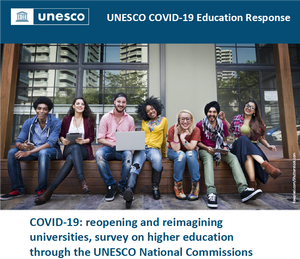
UNESCO recently conducted a global survey on COVID-19 and higher education systems. The survey was addressed to 193 Member States and 11 Associate Members. Sixty-five countries submitted responses, fifty-seven of which were used for the analysis. As per the landing page for the report, key findings are as follows:
Mode of teaching and learning: The major impact of COVID-19 on teaching and learning is the increase in online education. The hybrid mode of teaching has become the most popular form.
Access: The impact of COVID-19 on enrollment varies by regional and income levels. High income and Europe and North American countries are better able to cope with the disruption due to government funding support and increase in domestic enrollment.
International mobility: Mobility took a major hit, affecting international students significantly, but virtual mobility could compensate or even replace physical mobility.
University staff: Despite the closure of many universities, the impact of COVID-19 on university staff compared to the previous academic year is limited.
Disruption of research and extension activities: COVID-19 caused suspension and cancellation of teaching and research activities globally.
Widening inequality: The mixed impact of the pandemic on university finance shed a light on the exacerbation of inequality in higher education. Financial support from the government and external sources are crucial to the survival of HEIs.
University operations: The strong impact of the pandemic on HEIs operations caused reduced maintenance and services on campus and campuses closures worldwide.
National challenges: Health and adaptation to new modes and models of teaching are the top concerns for students and institutions.
Transition from higher education to work: The significant reduction of job opportunities makes the transition from higher education to the labor market more difficult. Employers are also seeking applicants with higher technology skills.
National priority: Strategic options for country-specific response are to improve infrastructure and availability of digital devices for online or distance learning as well as support for teachers and more international collaboration in research and policy dialogues.
Enquête de l'UNESCO sur la COVID-19 et l'enseignement supérieur
L'UNESCO a récemment mené une enquête mondiale sur la COVID-19 et les systèmes d'enseignement supérieur. L'enquête a été adressée à 193 États membres et 11 membres associés. Soixante-cinq pays ont soumis des réponses, dont cinquante-sept ont été utilisées pour l'analyse. Selon la page de destination du rapport, les principales conclusions sont les suivantes :
Modalités d’enseignement et d’apprentissage : le principal impact de la COVID-19 sur l’enseignement et l’apprentissage concerne un recours accru à l’enseignement en ligne, le mode d’enseignement hybride devenant la forme la plus répandue.
Accès : l’impact de la COVID-19 sur la scolarisation varie en fonction des régions et du niveau de revenu. Les pays à revenu élevé, notamment les pays d’Europe et d’Amérique du Nord, sont les mieux à même de faire face aux perturbations, grâce à des aides publiques et à l’accroissement des inscriptions au niveau national.
Mobilité internationale : la mobilité a été fortement réduite, avec un impact considérable sur les étudiants internationaux, mais la mobilité virtuelle a pu compenser, voire remplacer, la mobilité physique.
Personnel des universités : malgré la fermeture de nombreux établissements, l’impact de la COVID-19 sur le personnel des universités est limité par rapport à l’année universitaire précédente.
Perturbation des activités de recherche et périuniversitaires : la COVID-19 a entraîné la suspension ou l’annulation des activités d’enseignement et de recherche dans le monde.
Creusement des inégalités : l’impact varié de la pandémie sur le financement des universités a mis en lumière une exacerbation des inégalités dans l’enseignement supérieur. Le soutien financier des gouvernements et de sources extérieures est indispensable à la survie des établissements d’enseignement supérieur.
Fonctionnement des universités : les effets marqués de la pandémie sur le fonctionnement des établissements d’enseignement supérieur ont contraint ces derniers à réduire leurs dépenses d’entretien et les services sur les campus et causé la fermeture de campus dans le monde entier.
Défis nationaux : la santé et l’adaptation à de nouveaux modes et modèles d’enseignement arrivent en tête des préoccupations des étudiants et des établissements.
Passage de l’enseignement supérieur à la vie active : la forte contraction du marché de l’emploi rend plus difficile le passage de l’enseignement supérieur au monde du travail. Les employeurs sont également à la recherche de candidats ayant des compétences technologiques plus poussées.
Priorités nationales : les options stratégiques montrent une réponse adaptée de chaque pays, avec l’amélioration de l’infrastructure et la mise à disposition d’appareils numériques pour l’apprentissage en ligne ou à distance, ainsi que le soutien aux enseignants et une plus grande collaboration internationale en matière de recherche et de dialogues politiques.
Encuesta de la UNESCO sobre COVID-19 y educación superior
La UNESCO realizó recientemente una encuesta global sobre COVID-19 y los sistemas de educación superior. La encuesta se dirigió a 193 Estados Miembros y 11 Miembros Asociados. Sesenta y cinco países enviaron respuestas, cincuenta y siete de las cuales se utilizaron para el análisis. Según la página de destino del informe, los hallazgos clave son los siguientes:
Modalidades de enseñanza y aprendizaje: la principal repercusión de la COVID-19 en la enseñanza y el aprendizaje está vinculada al hecho de que se ha recurrido más a la enseñanza en línea y a la modalidad de enseñanza híbrida que se ha convertido en la forma más corriente.
Acceso: la repercusión de la COVID-19 en la escolarización varía en función de las regiones y del nivel de ingresos. Los países con altos índices de ingreso, fundamentalmente en Europa y América del Norte, son los que mejor hacen frente a las interrupciones, gracias a las ayudas públicas y al incremento de las matrículas a escala nacional.
Movilidad internacional: la movilidad quedó muy reducida, con una incidencia considerable en los estudiantes internacionales, pero la movilidad virtual pudo compensar, e incluso remplazar, a la movilidad física.
Personal académico: a pesar del cierre de numerosos establecimientos, la repercusión de la COVID-19 en el personal académico ha sido limitada con respecto al año lectivo universitario precedente.
Interrupción de las actividades de investigación y del ámbito universitario: la COVID-19 acarreó la suspensión o anulación de las actividades pedagógicas y de investigación en todo el mundo.
Incremento de las desigualdades: la repercusión variada de la pandemia en la financiación de las universidades demostró una exacerbación de las desigualdades en la educación superior. El apoyo financiero de los gobiernos y de las fuentes exteriores es indispensable para la supervivencia de los establecimientos de educación superior.
Funcionamiento de las universidades: los efectos de la pandemia en el funcionamiento de los centros de educación superior obligaron a que estos redujeran sus gastos de mantenimiento y los servicios en los recintos y provocó el cierre de los recintos en todo el mundo.
Desafíos a escala nacional: la salud y la adaptación a nuevos modos y modelos de enseñanza se sitúan entre las primeras preocupaciones de los estudiantes y los establecimientos.
Transición de la educación superior a la vida activa: la gran concentración del mercado laboral dificulta más el tránsito de la educación superior al mundo laboral. Los empleadores también buscan a los candidatos con mayores competencias tecnológicas.
Prioridades nacionales: las opciones estratégicas demuestran una respuesta adaptada de cada país, con la mejoría de la infraestructura y el suministro de dispositivos digitales para el aprendizaje en línea o a distancia, así como el apoyo a los docentes y una mayor colaboración internacional en materia de investigación y de diálogos relativos a las políticas.

Die
Bundesvorsitzende des VkdL verstarb nach kurzer schwerer Krankheit
Essen,
3. August 2021. Der Verein katholischer deutscher
Lehrerinnen e.V. (VkdL) trauert um seine langjährige Bundesvorsitzende:
Roswitha Fischer verstarb am 29. Juli 2021 nach kurzer schwerer Krankheit im
Uniklinikum Essen. Der Vorstand des VkdL sowie seine Mitglieder und die
Mitarbeiterinnen der Bundesgeschäftsstelle sind bestürzt über den frühen Tod
der Oberstudienrätin, die bis Sommer 2014 an einem katholischen
Mädchengymnasium in Günzburg tätig war.
Seit
2002 hatte Roswitha Fischer den Bundesvorsitz des katholischen Verbandes
übernommen, nachdem sie bereits über viele Jahre (seit 1994) Stellvertretende
Bundesvorsitzende war und sich als Landesvorsitzende des VkdL in Bayern, als
Diözesanvorsitzende in Augsburg und als Vertreterin des VkdL im Landeskomitee
der Katholiken in Bayern für die Ziele des Pädagoginnenvereins engagiert hatte.
Mit viel Herzblut und aus
tiefster Glaubensüberzeugung machte sich Roswitha Fischer für die Belange der
Kinder und Jugendlichen stark, kämpfte für den konfessionellen
Religionsunterricht und engagierte sich für das gegliederte Schulwesen in
Deutschland – gemeinsam mit Ingrid Ritt von der Initiative „3 X MEHR" in
Bayern.
In den letzten Jahren kümmerte
sie sich liebevoll um die Pflege der Ehrenvorsitzenden, Nelly Friedrich, die
vor ihr den Bundesvorsitz bekleidet hatte.
Roswitha Fischer wird am
Freitag, 6. August 2021, um 10.00 Uhr in ihrer bayerischen Heimat im Landkreis
Starnberg beigesetzt und findet ihre letzte Ruhestätte auf dem Friedhof von
Mariä Himmelfahrt in Aufkirchen.
Elle laisse un grand vide
La
présidente fédérale du VkdL est décédée après une courte maladie grave.
Essen,
3 août 2021. L'association des enseignantes allemandes catholiques e.V. (VkdL)
pleure la perte de son président national de longue date: Roswitha Fischer est
décédée le 29 juillet 2021 après une courte maladie grave à l'hôpital
universitaire d'Essen. Le conseil d'administration de VkdL ainsi que ses
membres et le personnel du bureau fédéral sont attristés par le décès prématuré
de l'enseignante principale, qui a travaillé dans une école secondaire
catholique pour filles à Günzburg jusqu'à l'été 2014.
Depuis
2002, Roswitha Fischer avait repris la présidence fédérale de l'association
catholique, après en avoir été la vice-présidente fédérale pendant de
nombreuses années (depuis 1994) et s'être engagée en faveur des objectifs de
l'association des femmes éducatrices en tant que présidente régionale du VkdL
en Bavière, présidente diocésaine à Augsbourg et représentante du VkdL au sein
du comité régional des catholiques en Bavière.
Avec beaucoup de cœur et d'âme
et par conviction de foi profonde, Roswitha Fischer a défendu les intérêts des
enfants et des jeunes, s'est battue pour un enseignement religieux
confessionnel et s'est engagée en faveur du système scolaire divisé en
Allemagne - avec Ingrid Ritt de l'initiative "3 X MEHR" en Bavière.
Ces dernières années, elle
s'est occupée avec amour de la présidente d'honneur, Nelly Friedrich, qui avait
occupé la présidence fédérale avant elle.
Roswitha Fischer sera enterrée
le vendredi 6 août 2021, à 10 heures, dans sa maison bavaroise du district de
Starnberg et trouvera sa dernière demeure au cimetière de Mariä Himmelfahrt à
Aufkirchen.
She
leaves a big gap
The Federal Chairwoman of the
VkdL passed away after a short serious illness
Essen, 3 August 2021. The
Association of Catholic German Women Teachers e.V. (VkdL) mourns the loss of
its long-time national chairperson: Roswitha Fischer passed away on 29 July
2021 after a short serious illness in the University Hospital Essen. The VkdL
board as well as its members and the staff of the federal office are saddened
by the early death of the senior teacher, who worked at a Catholic girls'
secondary school in Günzburg until summer 2014.
Since 2002, Roswitha Fischer
had taken over the federal chairmanship of the Catholic association, after
having been the deputy federal chairperson for many years (since 1994) and
having been committed to the goals of the association of women educators as the
regional chairperson of the VkdL in Bavaria, as the diocesan chairperson in
Augsburg and as the representative of the VkdL in the regional committee of
Catholics in Bavaria.
With a lot of heart and soul
and out of deepest faith conviction, Roswitha Fischer stood up for the
interests of children and young people, fought for confessional religious
education and was committed to the divided school system in Germany - together
with Ingrid Ritt from the initiative "3 X MEHR" in Bavaria.
In recent years, she lovingly
cared for the honorary chairperson, Nelly Friedrich, who had held the federal
chairmanship before her.
Roswitha Fischer will be
buried on Friday, 6 August 2021, at 10.00 a.m. in her Bavarian home in the
district of Starnberg and will find her final resting place at the cemetery of
Mariä Himmelfahrt in Aufkirchen.