Visualizzazione post con etichetta truth. Mostra tutti i post

martedì 20 giugno 2023

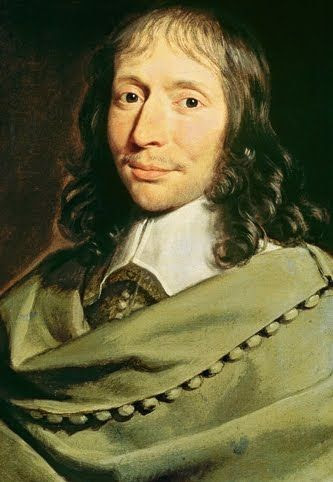
BLAISE PASCAL, BRILLANT PHILOSOPHER

Pope Francis celebrates 'brilliant' mathematician and philosopher Blaise Pascal

In a new Apostolic Letter released on the day he would have turned 400, Pope Francis praises the “brilliant and inquisitive mind” of the French thinker Blaise Pascal.

By Joseph Tulloch

 "A tireless seeker of the truth".

 That’s how Pope Francis defines Blaise Pascal, the French mathematician, physicist and philosopher born 400 years ago today.

 The Pope has dedicated an Apostolic Letter to him, stressing his scientific brilliance, concern for the poor, and relentless search for God.

 The letter

A key theme of Pope Francis’ letter is the “brilliant and inquisitive mind” of Pascal. A child prodigy, he made important breakthroughs in mathematics and, at age 19, invented an arithmetic calculator, a forerunner of the modern computer.

 The Pope stresses that Pascal used his intellectual gifts to wrestle with “the questions that troubled his age”, inventing, for example, the “five-penny coaches” system, the world’s first public transport network.

 The Holy Father goes on to praise Pascal – who, aged 31, underwent a conversion experience he referred to as the “Night of Fire” – for his nuanced understanding of the role of reason in religious belief.

 On the one hand, the Pope says, Pascal argued for the "reasonableness of faith in God”; on the other, precisely because of his own intellectual prowess, he also recognised reason’s limits, and stressed the importance of responding with faith to God’s call.

 A final theme to emerge from the letter is Pascal’s attention to those less well-off than himself.

 The Pope quotes Pascal’s words on his deathbed: “If the physicians tell the truth, and God grants that I recover from this sickness, I am resolved to have no other work or occupation for the rest of my life except to serve the poor.”

“It is moving,” Pope Francis writes, “to realize that in the last days of his life, so great a genius as Blaise Pascal saw nothing more pressing than the need to devote his energies to works of mercy.”

 Cardinal Tolentino: Pope “profound admirer” of Pascal’s

At a press conference convened to present the Apostolic Letter, Cardinal Tolentino de Mendonça  – the Prefect of the Vatican’s Dicastery for Culture and Education – stressed that Pope Francis is a “profound admirer” of Pascal.

The Cardinal noted that the Pope has released (or is planning to release) a number of such Apostolic Letters, on figures, such as Dante Alighieri and Saint Therese of Lisieux, whom he judges “beacons” for the contemporary world.

Pascal, the Portuguese Cardinal said, is one such beacon, because he “brings everything together”: science and faith, philosophy and mathematics, spirituality and a practical mindset.

He also stressed that Pope Francis’ letter, as well as discussing the well-known aspects of the French writer’s life, makes an original contribution in that it delves into lesser-known territory, such as his concern for the poor.

In response to a question about Pascal’s association with Jansenism, a controversial theological movement in the early modern Church, the Cardinal said that the French writer was “perfectly Catholic.”

SUBLIMITAS ET MISERIA HOMINIS

[ AR  - DE  - EN  - ES  - FR  - IT  - PL  - PT ]


domenica 13 maggio 2018

WORLD COMMUNICATIONS DAY - 13th May 2018 - MESSAGE: [ DE - EN - ES - FR - HR - IT - PL - PT - ZH_CN - ZH_TW ]


The truth will set you free 
(Jn 8: 32)

The Catholic Church celebrates World Communications Day on Sunday 13th May, when we are asked to pray for those who work in the media and when a second collection is taken after Mass to fund the Church’s important work in this area. Pope Francis, in his Message for World Communications Day focuses on ‘Fake News and Journalism for Peace.’


 Read: MESSAGE
 [ DE  - EN  - ES  - FR  - HR  - IT  - PL  - PT  - ZH_CN  - ZH_TW ] 


giovedì 7 dicembre 2017

POST-TRUTH ERA

Post-Truth Era

By IonuțPopescu Ph.D.
Head of the Greek-Catholic Faculty, Oradea, Romania

               Our presentation is a reflection on the status of education in the context of the so-called post-truth. The term designates a situation in which public opinion is formed rather according to the emotions and personal beliefs of individuals than by facts, and became known especially after it was used to explain the difference between the polls and the result in the presidential elections in The United States in 2016 and the vote on Britain's exit from the European Union. Emotion-based views are not new, the strategy of circumventing deeds in establishing truth is older[, but only now does it turn out to be a characteristic of the age because ofconsequences magnitude and the fact that its disclosure does not invalidate its effects. In other words, people freely accept[ as truth a theory that they know the facts contradict. It is true that the reporting to these facts is not direct, but mediated by the press or other informative means, we speak of post-truth in situations such as the Moon landing of the American astronauts, the 9/11, in 2001, the effects of smoking on health, the reasons for invading Iraq in 2003, global warming, vaccines.......