Visualizzazione post con etichetta women. Mostra tutti i post

venerdì 14 marzo 2025

HOPE VOICE OF WOMEN


en - fr . es 

On March 13, 2025, the online event "Hope voice of women" was held, celebrating International Women's Day, which saw the participation of schools, associations and speakers from various parts of the world, offering a special opportunity to reflect on the rights, strength and fundamental role of women in society, with a particular focus on female empowerment and resilience. The participating classes had been preparing for over a week, with research and debates on the problem.


-         By Vito Luca Scozzari

 The initiative, organized in collaboration with the World Union of Teachers UMEC-WUCT, was attended by witnesses, in addition to Italians, from Burkina Faso, Congo, Romania and Ukraine, as well as the representative of UNESCO in Paris. Various cultures, various voices and various languages that highlighted the problems of women in various nations. The students were the protagonists. The introduction was curated by Antonino Ingoglia and Andrea Caracci of the ISSGB Ferrigno-V. Accardi of Castelvetrano. Antonino Ingoglia opened the event by underlining the importance of remembering the social, economic and political achievements of women and of reflecting on the challenges they still face. Andrea Caracci celebrated the resilience, courage and power of women, calling for greater commitment to a future of gender equality.

 Professors Carlino and Mastrantoni opened the speeches, followed by the Headmistress Professor Maria Luisa Simanella, who presented the work carried out by the IC Nosengo with the screening of the video "Video-Hope-voice-of-Woman-IC-G. Nosengo.

 Giovanni Perrone (Special Advisor of UMEC-WUCT) brought greetings from the Union and its president (Prof. Jan De Groof), highlighting the educational commitment that UMEC-WUCT (World Union of Catholic Teachers) has in various countries of the world and the serious problems that many women experience in certain situations, for example in Afghanistan, where women do not even have the right to speak. Danila Ioan, a student at the Roman Catholic College in Bucharest, offered an in-depth look at the figure of Marie Curie and the educational work that her school carries out in favor of the valorization of women and of dialogue and mutual respect.

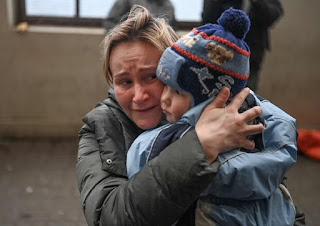
 Kateryna Chernyavska, president of the Association “Pro Ukraine” offered a touching reflection on the resilience of Ukrainian women in the face of the violence of war, also remembering women who suffer violence in different contexts, missing children, husbands in the trenches, hunger and fear, thousands of deaths .... She asked for a thought and a prayer for women who live in situations of uncertainty, poverty and even death.

 Professor Ornella Valerio, regional president of AIMC of Lombardy, together with her students, presented the preparatory work done in class and a video on the song "Imagine all the people".

 Giusy Cavarretta, President of Fidapa-BPW-Castelvetrano Section, illustrated her federation's commitment to the promotion of women. Mme Solene Tshilobo, from the Democratic Republic of Congo, President of the NGO ADEPESIDI, and Umec-Wuct representative in RD Congo, spoke about the emancipation of women and girls, emphasizing the progress made and the challenges still to be faced, such as equal pay and violence against women. In this period she said, unfortunately, the war that has involved her country, is causing serious problems, mainly to women.

 Cristina Boffelli, President of the CHIARA Association, offered another significant contribution on the association's commitment to helping women, especially those in difficulty.

 Sabine OUARME (Burkina Faso) highlighted the situation in which many women live in her country (poverty, violence, etc.) but also the generous commitment of those who work for the progress of women and equality between women and men. Father Albert Kabuge, representative for UNESCO, in bringing the greetings of the international organization, illustrated the recent initiatives in favor of women that have taken place in Paris, in this last period, inviting schools to visit the world headquarters of UNESCO.

 Vito Luca Scozzari, national councilor of AIMC, coordinator of the initiative and contact person for the support of the Ferrigno Institute, thanked the participants and underlined the importance of continuing to promote innovative teaching that helps young generations overcome stereotypes, prejudices and various forms of violence.

 Maria Luisa Simanella, director of the Institute, concluded the event, expressing enthusiasm for the success of the initiative and thanking everyone for their active and attentive participation. “Hope voice of woman" has confirmed itself as a moment of reflection and celebration, which has given voice to the hopes and resilience of women around the world, promoting a more just and inclusive future. She expressed the hope that similar initiatives can be organized in the future.

 The event promoted intercultural dialogue and comparison between different cultures, generations and institutions. It highlighted the importance of deepening knowledge of women's rights, developing digital and communication skills to promote a better society in which, starting from family life, the culture of respect and mutual collaboration is promoted.

 For everyone, the greeting was “see you again”, with the intent of continuing the comparison and collaboration between different institutions. It is worth highlighting the amazement and interest of the many students who followed the initiative and found themselves, for the most part, in comparison with peers and adults from various nations.


 Le 13 mars 2025, l'événement en ligne « Hope voice of woman » a eu lieu, célébrant la Journée internationale de la femme, qui a vu la participation d'écoles, d'associations et d'intervenants de diverses parties du monde, offrant une occasion particulière de réfléchir aux droits, à la force et au rôle fondamental des femmes dans la société, avec un accent particulier sur l'autonomisation et la résilience des femmes. Les classes participantes se préparent depuis plus d’une semaine, avec des recherches et des discussions sur le problème.

  Par Vito Luca Scozzari

 L'initiative, organisée en collaboration avec le Union mondial des enseignants UMEC-WUCT, a vu la participation de témoins, outre des Italiens, du Burkina Faso, du Congo, de Roumanie et d'Ukraine, ainsi que du représentant de l'UNESCO à Paris. Différentes cultures, différentes voix et différentes langues ont mis en évidence les problèmes des femmes dans différentes nations. Les étudiants étaient les protagonistes. L'introduction a été éditée par Antonino Ingoglia et Andrea Caracci de l'ISSGB Ferrigno-V. Accardi de Castelvetrano. Antonino Ingoglia a ouvert l’événement en soulignant l’importance de se souvenir des réalisations sociales, économiques et politiques des femmes et de réfléchir aux défis auxquels elles sont encore confrontées. Andrea Caracci a célébré la résilience, le courage et le pouvoir des femmes, appelant à un plus grand engagement en faveur d’un avenir d’égalité des sexes.

 Les prof. Carlino et Mastrantoni ont ouvert les discours, suivis de la directrice, la professeure Maria Luisa Simanella, qui a présenté le travail réalisé par l'IC Nosengo avec la projection de la vidéo "Vidéo-Espoir-voix-de-Femme-IC-G. Nosengo.

 Giovanni Perrone (Conseiller spécial de l'UMEC-WUCT) a transmis les salutations de l'Union et de son président (le professeur Jan De Groof), en soulignant l'engagement éducatif que l'UMEC-WUCT (Union mondiale des enseignants catholiques) a dans différents pays du monde et les graves problèmes que rencontrent de nombreuses femmes dans certaines situations, par exemple en Afghanistan, où les femmes n'ont même pas le droit de parler. Danila Ioan, étudiante au Collège catholique romain de Bucarest, a proposé un regard approfondi sur la figure de Marie Curie et sur le travail éducatif que son école mène en faveur de la valorisation des femmes et du dialogue et du respect mutuel.

 Kateryna Chernyavska, présidente de l’association « Pro Ukraine » a offert une réflexion touchante sur la résilience des femmes ukrainiennes face à la violence de la guerre, se souvenant également des femmes qui subissent des violences dans différents contextes, des enfants disparus, des maris dans les tranchées, la faim et la peur, des milliers de morts…. Elle a demandé une pensée et une prière pour les femmes qui vivent dans des situations d’incertitude, de pauvreté et même de mort.

 La professeure Ornella Valerio, présidente régionale de l'AIMC de Lombardie, accompagnée de ses étudiants, a présenté le travail préparatoire réalisé en classe et une vidéo sur la chanson "Imagine all the people".

 Giusy Cavarretta, présidente de la section Fidapa-BPW-Castelvetrano, a illustré l'engagement de sa fédération en faveur de la promotion des femmes. Mme Solène Tshilobo, de la République Démocratique du Congo, Présidente de l’ONG ADEPESIDI, et représentant de l’Umec au RD Congo,  a parlé de l’autonomisation des femmes et des filles, soulignant les progrès réalisés et les défis restant à relever, tels que l’égalité salariale et les violences faites aux femmes. Il a déclaré que, malheureusement, à cette époque, la guerre qui touche son pays cause de graves problèmes, principalement aux femmes.

 Cristina Boffelli, présidente de l'association CHIARA, a apporté une autre contribution significative sur l'engagement de l'association en faveur des femmes, en particulier celles en difficulté.

 Sabine OUARME (Burkina Faso) a souligné la situation dans laquelle vivent de nombreuses femmes dans son pays (pauvreté, violence, etc.) mais aussi l’engagement généreux de celles et ceux qui œuvrent pour le progrès des femmes et l’égalité entre les femmes et les hommes. Le Père Albert Kabuge, représentant de l'UNESCO, en apportant les salutations de l'organisation internationale, a illustré les récentes initiatives en faveur des femmes qui ont eu lieu à Paris au cours de cette dernière période, invitant les écoles à visiter le siège mondial de l'UNESCO.


El 13 de marzo de 2025 se celebró el evento online “La esperanza, voz de la mujer”, conmemorando el Día Internacional de la Mujer, que contó con la participación de escuelas, asociaciones y ponentes de diversas partes del mundo, ofreciendo una oportunidad especial para reflexionar sobre los derechos, la fuerza y el papel fundamental de la mujer en la sociedad, con especial atención al empoderamiento y la resiliencia femenina. Las clases participantes se han estado preparando durante más de una semana, con investigaciones y debates sobre la problemática.

 - Vito Luca Scozzari

En la iniciativa, organizada en colaboración con la Unión Mundial de Docentes UMEC-WUCT, participaron, además de italianos, testigos de Burkina Faso, Congo, Rumania y Ucrania, así como el representante de la UNESCO en París. Diferentes culturas, diferentes voces y diferentes idiomas han puesto de relieve los problemas de las mujeres en distintas naciones. Los estudiantes fueron los protagonistas. La introducción fue editada por Antonino Ingoglia y Andrea Caracci de ISSGB Ferrigno-V. Accardi de Castelvetrano. Antonino Ingoglia inauguró el evento subrayando la importancia de recordar los logros sociales, económicos y políticos de las mujeres y reflexionar sobre los desafíos que aún enfrentan. Andrea Caracci celebró la resiliencia, el coraje y el poder de las mujeres, pidiendo un mayor compromiso con un futuro de igualdad de género.

 El profesor. Carlino y Mastrantoni abrieron las intervenciones, seguidas por la directora, Prof. Maria Luisa Simanella, quien presentó el trabajo realizado por el IC Nosengo con la proyección del vídeo "Video-Esperanza-voz-de-Mujer-IC-G. Nosengo".

 Giovanni Perrone (Asesor Especial de UMEC-WUCT) trajo los saludos de la Unión y de su presidente (Prof. Jan De Groof), destacando el compromiso educativo que UMEC-WUCT (Unión Mundial de Profesores Católicos) tiene en varios países del mundo y los graves problemas que viven muchas mujeres en determinadas situaciones, por ejemplo en Afganistán, donde las mujeres ni siquiera tienen derecho a hablar. Danila Ioan, estudiante del Colegio Católico Romano de Bucarest, ofreció una mirada en profundidad a la figura de Marie Curie y al trabajo educativo que su escuela realiza a favor de la valorización de la mujer y del diálogo y el respeto mutuo.

 Kateryna Chernyavska, presidenta de la Asociación “Pro Ucrania” ofreció una conmovedora reflexión sobre la resiliencia de las mujeres ucranianas frente a la violencia de la guerra, recordando también a las mujeres que sufren violencia en diferentes contextos, los niños desaparecidos, los maridos en las trincheras, el hambre y el miedo, miles de muertos…. Pidió un pensamiento y una oración por las mujeres que viven situaciones de incertidumbre, pobreza e incluso muerte.

 La profesora Ornella Valerio, presidenta regional de la AIMC de Lombardía, junto a sus estudiantes, presentó el trabajo preparatorio realizado en clase y un vídeo sobre la canción "Imagine all the people".

 Giusy Cavarretta, Presidenta de la Sección Fidapa-BPW-Castelvetrano, ilustró el compromiso de su federación con la promoción de la mujer. La Sra. Solene Tshilobo, de la República Democrática del Congo, Presidenta de la ONG ADEPESIDI, y representante de la UMEC en la RD Congo, habló sobre el empoderamiento de las mujeres y las niñas, destacando los avances logrados y los desafíos que aún quedan por abordar, como la igualdad salarial y la violencia contra las mujeres. En este período dijo que, lamentablemente, la guerra que involucra a su país, está causando graves problemas, principalmente a las mujeres.

 Cristina Boffelli, Presidenta de la Asociación CHIARA, ofreció otra aportación significativa sobre el compromiso de la asociación en ayuda de las mujeres, especialmente de aquellas en dificultad.

 Sabine OUARME (Burkina Faso) destacó la situación en la que viven muchas mujeres en su país (pobreza, violencia, etc.) pero también el compromiso generoso de quienes trabajan por el progreso de las mujeres y la igualdad entre mujeres y hombres. El padre Albert Kabuge, representante ante la UNESCO, al traer los saludos del organismo internacional, ilustró las recientes iniciativas a favor de la mujer que han tenido lugar en París en este último período, invitando a las escuelas a visitar la sede mundial de la UNESCO.

 Vito Luca Scozzari, consejero nacional de la AIMC, coordinador de la iniciativa y persona de contacto para el apoyo del Instituto Ferrigno, agradeció a los participantes y subrayó la importancia de seguir promoviendo una enseñanza innovadora que ayude a las jóvenes generaciones a superar estereotipos, prejuicios y diversas formas de violencia.

 María Luisa Simanella, directora del Instituto, cerró el acto, expresando entusiasmo por el éxito de la iniciativa y agradeciendo a todos por su participación activa y atenta. “La voz de la esperanza de la mujer” se ha consolidado como un momento de reflexión y celebración que ha dado voz a las esperanzas y la resiliencia de las mujeres de todo el mundo, promoviendo un futuro más justo e inclusivo. Espera que se organicen iniciativas similares en el futuro.

 El evento promovió el diálogo intercultural y la comparación entre diferentes culturas, generaciones e instituciones. destacó la importancia de profundizar en el conocimiento de los derechos de las mujeres, desarrollar habilidades digitales y comunicativas para promover una sociedad mejor en la que, desde la vida familiar, se promueva la cultura del respeto y la colaboración mutua.

 Para todos, el saludo fue “hasta pronto”, con la intención de continuar el diálogo y la colaboración entre diferentes instituciones. Es de destacar el asombro y el interés de muchos estudiantes que siguieron la iniciativa y se encontraron, en su mayoría, en comparación con sus compañeros y adultos de diversas naciones.


martedì 8 marzo 2022

UNESCO - INTERNATIONAL WOMEN'S DAY

In 2022, UNESCO joins its voice to that of the entire UN family by celebrating this International Women’s Day under the theme “Gender equality today for a sustainable tomorrow(link is external)”, recognizing the contribution of women and girls around the world who are leading the charge on climate change adaptation, mitigation, and response, to build a more sustainable future for all.


Communiqué on Women and Girls in Ukraine

Read the complete message in English Français

In its landmark Resolution 1325 on Women, Peace and Security (2000), the United Nations Security Council calls on “all parties to armed conflict to take special measures to protect women and girls from gender-based violence, particularly rape and other forms of sexual abuse, and all other forms of violence in situations of armed conflict.”

Twenty-two years later, on International Women’s Day, UNESCO is deeply concerned at the devastating escalation of violence in Ukraine, which threatens the safety and protection of women and girls across its fields of competence.

Twenty-two years later, on International Women’s Day, UNESCO is deeply concerned at the devastating escalation of violence in Ukraine, which threatens the safety and protection of women and girls across its fields of competence.

In education, first of all, the current situation in Ukraine is endangering the lives and futures of the country’s 7.5 million children, both girls and boys, who are now without access to learning. As we have seen with the COVID-19 pandemic, educational disruptions put a high number of girls at risk of never returning to school. UNESCO stands with education institutions to ensure that girls and women do not pay the price of this conflict with their future.

In this conflict, women journalists are also under threat. UNESCO recalls UN Security Council Resolution 2222, which not only acknowledges the specific risks faced by women journalists, media professionals and associated personnel in carrying out their work, but also underlines the importance of considering the gender dimension of measures to address their safety in situations of armed conflict. UNESCO is monitoring worrying reports of women journalists being beaten, detained and threatened.

In addition, UNESCO is responding to the cultural community's appeal for solidarity to protect artists and cultural workers in Ukraine, including their freedom of artistic expression. Women artists and cultural workers need urgent access to emergency resources such as safe havens for themselves and their artistic works. UNESCO deeply regrets reports of damage to the works of the celebrated Ukrainian artist, Maria Primachenko, with whose anniversary UNESCO was associated in 2009. UNESCO is mobilized to ensure that this does not happen again.

Ukrainian women scientists who are dedicating their life to finding solutions to some of the most pressing issues, such as the climate change expert Svitlana Krakovska, have had to withdraw from negotiations on the impact of global warming. UNESCO has celebrated the achievements of some of these scientists throughout the years - such as the mathematician Olena Vaneeva who was nominated UNESCO/L’Oréal International Rising Talent in 2020 - and will continue to stand by their side.

The critical voices of women journalists, educators, artists and scientists are the bedrock of society and democratic discourse. They are essential to preserve peace, to uphold human rights and fundamental freedoms. Yet, their unique role is also what makes them a priority target of narratives of hate, dominance, and destruction.

As we celebrate International Women’s Day this year, UNESCO is committed to the protection of women and girls across the globe. Equality is a universal cause and an everyday imperative, in times of peace and in times of conflict. Today more than ever, we must show that we are equal to these challenges.


mercoledì 8 aprile 2020

UN - ONU - PANDEMIC AND DOMESTIC VIOLENCE


UN chief urges fight against surge in domestic violence amid pandemic

UN Secretary-General António Guterres is calling for measures to address a “horrifying global surge in domestic violence” against women and girls under Covid-19 lockdown.

By Robin Gomes

The UN chief is calling for measures to address a “horrifying global surge in domestic violence” directed towards women and girls, linked to lockdowns and quarantines imposed by governments responding to the COVID-19 pandemic.
In a video message on Sunday, UN Secretary-General António Guterres referred to his repeated appeals for a ceasefire in conflicts around the world, to focus on the shared effort to overcome the virus. 
He pointed out that violence is not confined to the battlefield, and “for many women and girls, the threat looms largest where they should be safest: in their own homes”.
An existing problem
The combination of economic and social stresses brought on by the pandemic, as well as restrictions on movement, have dramatically increased the numbers of women and girls facing abuse, in almost all countries.
However, even before the global spread of the new coronavirus, statistics showed that a third of women around the world experienced some form of violence in their lives.
The issue affects both developed and poorer economies: nearly a quarter of female college students reported having experienced sexual assault or misconduct in the USA, whilst in parts of sub-Saharan Africa, partner violence to be a reality for 65 per cent of women.
Repercussion on women
World Health Organization (WHO) research shows that women who experience physical or sexual abuse are twice as likely to have an abortion, and the experience nearly doubles their likelihood of falling into depression. In some regions, they are 1.5 times more likely to acquire HIV, and evidence exists that sexually assaulted women are 2.3 times more likely to have alcohol disorders.
87,000 women were intentionally killed in 2017, and more than half were killed by intimate partners or family members.
Shockingly, violence against women is as serious a cause of death and incapacity among women of reproductive age as cancer, and a greater cause of ill health than traffic accidents and malaria combined.
Surge in violence in pandemic
Since the pandemic, the UN is reporting that Lebanon and Malaysia, for example, have seen the number of calls to helplines double, compared with the same month last year; in China they have tripled; and in Australia, search engines such as Google are seeing the highest magnitude of searches for domestic violence help in the past five years.  (Source: UN)
Calls to the helpline of Spain’s semi-autonomous Catalonia region had risen by 20% in the first few days of the lockdown; a similar hotline in Cyprus saw a 30% rise in the week after its first coronavirus case was reported on 9 March.  
The situation is unknown in countries that lack reporting systems, where the vulnerability of women and girls is expected to be higher.  Responding to the rise in violence is further complicated by the fact that institutions are already under a huge strain from the demands of dealing with the pandemic.
Overwhelmed by Covid-19
“Healthcare providers and police are overwhelmed and understaffed”, said Guterres, “local support groups are paralyzed or short of funds. Some domestic violence shelters are closed; others are full”.
The UN chief urged all governments to make the prevention and redress of violence against women a key part of their national response plans for COVID-19, and outlined several actions that can be taken to improve the situation.
Prevent violence in war and home
“Together,” he said, “we can and must prevent violence everywhere, from war zones to people’s homes, as we work to beat COVID-19”.
In a tweet on Monday Guterres wrote: “Peace is not just the absence of war. Many women under lockdown for #COVID19 face violence where they should be safest: in their own homes.  Today I appeal for peace in homes around the world.  I urge all governments to put women’s safety first as they respond to the pandemic.” 


domenica 8 marzo 2020

WOMEN'S DAY


Pope on Women’s Day: women build world with peace, love

Speaking about the role of women in “making humanity a family”, the Pope said that peace, born of women, “arises and is rekindled by the tenderness of mothers.”  “Thus the dream of peace becomes a reality when we look towards women.”  He said they “dream of love into the world”.  “If we take to heart the importance of the future, if we dream of a future peace, we need to give space to women,” the Pope urged.


sabato 23 marzo 2019

UN - ONU - GENDER EQUALITY AND GENDER IDEOLOGY. PROTECTING WOMEN AND GIRLS


Statement by H.E. Archbishop Bernardito Auza
Apostolic Nuncio, Permanent Observer of the Holy See

At the Side Event entitled
“Gender Equality and Gender Ideology: Protecting Women and Girls”

United Nations, New York, 20 March 2019


Your Excellencies, Distinguished Panelists, Dear  Friends,
I am very happy to welcome you to this morning’s event on gender equality and gender ideology and the need to protect women and girls, which the Holy See is pleased to be sponsoring, together with the Heritage Foundation.
Each year the Economic and Social Council hosts the Commission on the Status of Women (CSW) to promote, report on and monitor issues relating to the political, economic, civil, social and educational rights of women. When the CSW first began meeting in 1947 in Lake Success, New York, there was a clear understanding of what it meant to be a woman. Even though over the course of the subsequent 62 years, there have been various debates among women from different continents and backgrounds over the goals and rights of women and the best means to achieve them, everyone knew to whom they were referring when they spoke, for example, about gender equality, violence against women, girls’ education, or equal pay for equal work. Even as recently as 2011, when the United Nations Entity for Gender Equality and the Empowerment of Women, also known as UN Women, was founded, everyone knew whom it was representing and whose cause it was seeking to advance: the approximately half of the human race born with the capacity for motherhood, with two X chromosomes, with particular physical, hormonal, and relational traits that distinguish them from the approximate other half of the human race, men.
That consensus has unfortunately been getting eroded due to the recent phenomenon of gender identity and gender ideology. Whereas before everyone knew what “woman” meant based on her bodily nature, now many proponents of gender ideology assert that bodily nature has nothing intrinsically to do with womanhood beyond how sex is “assigned” at birth. Womanhood, rather, is looked at as the way one thinks about oneself, or expresses oneself, and therefore, they argue, those who consider themselves women must be treated as women, regardless of biological nature at the cellular, endocrinological or reproductive levels, regardless of primary and secondary sexual characteristics, or other factors.
This way of looking at womanhood primarily as a self-identity independent of bodily considerations was raised at the beginning of this 63rd Session of the Commission on the Status of Women in the statement given by the LGBTI Core Group, delivered by the Permanent Representative of Norway, Ambassador Mona Juul. The Statement said that the LGBTI Core Group — an informal cross regional group of 28 Member States together with the UN High Commissioner for Human Rights, and the NGOs Human Rights Watch and Outright Action International — spoke explicitly about “transgender persons” whose “names and sex details in official documents do not match their gender identity or expression.” It said it “stands ready to work with all partners to ensure that all women and girls — no matter their sexual orientation, gender identity, gender expression and sex characteristics — have adequate and equal access to social protection systems, public services and sustainable infrastructure.”
The LGBTI Core Group was saying that the understanding of “women and girls” should be based on “gender identity or expression” rather than on their biological sex. This understanding of womanhood would likely have astonished the 15 original members of the CSW in 1947 and most of the delegates who have represented their governments and NGOs here each year since.
 Whereas 62 years ago, it was not necessary to ask the important preliminary question, “What is woman?,” because everyone everywhere had a clear and univocal understanding of what this meant, now, when that understanding is being challenged and many are seeking to stipulate a fundamental change in its meaning, the international community must ask it.
The reason is because so much depends on the answer, not only in terms of law, education, economy, health, safety, sports, language and culture, as we will hear about today from our speakers — Mary Hasson, Emilie Kao, Monique Robles and Ryan Anderson — but also in terms of basic anthropology, human dignity, human rights, marriage and family, motherhood and fatherhood, and the cause of women, men, and especially children. To substitute gender identity or expression for biological sex has enormous ramifications in all of these areas and for that reason we must, with courtesy and compassion, ask the perhaps uncomfortable questions because the answers matter.
Pope Francis, while emphatically encouraging Catholics and all people of good will to support, welcome, accompany and love all those whose gender identity does not match their biological sex, to affirm their human dignity and defend their fundamental human rights to be free of violence and unjust discrimination (October 2, 2016), at the same time has been very clear about the dangers to individuals and society flowing from gender ideology.
He says that the anthropological underpinnings of gender ideology, by denying the “difference and reciprocity in nature of a man and a woman,” by promoting a “personal identity and emotional intimacy radically separated from the biological difference between male and female,” ultimately makes human identity “the choice of the individual” and undermines the “anthropological basis for the family.” It is “one thing to be understanding of human weakness and the complexities of life,” he continues, “and another to accept ideologies that attempt to sunder what are inseparable aspects of reality.” We are called, he emphasized, “to protect our humanity, and this means, in the first place, accepting it and respecting it as it was created” (Amoris Laetitia, 56). Our sex, just like our genes, our race, our age, and other natural characteristics, are objective givens, not subjective choices.
In his encyclical on Care for our Common Home, Laudato Sì’, which has become perhaps the most commonly cited papal document in U.N. history since its 2015 release in anticipation of the Paris Agreement, he said, “Acceptance of our bodies … is vital for welcoming and accepting the entire world as a gift, … whereas thinking that we enjoy absolute power over our own bodies turns, often subtly, into thinking that we enjoy absolute power over creation. Learning to accept our body, to care for it and to respect its fullest meaning, is an essential element of any genuine human ecology. Moreover, valuing one’s own body in its femininity or masculinity is necessary if I am going to be able to recognize myself in an encounter with someone who is different.” He added elsewhere, “The complementarity of man and woman …  is being questioned by the so-called gender ideology in the name of a more free and just society,” and stressed, “The differences between man and woman are not for opposition or subordination, but for communion and generation” (June 8, 2015). Rather than leading to a more free and just society, in other words, gender ideology hinders communion and generation between men and women. It’s a “step backwards,” because “the removal of [sexual] difference in fact creates a problem, not a solution” (April 15, 2015).
 When the natural, complementary duality of man and woman is called into question, the very notion of being — what it means to be human — is undermined. The body no longer is a defining element of humanity. The person is reduced to spirit and will and the human being almost becomes an abstraction until one discerns what nature one is or chooses what gender one wants to be. Pope Francis is particularly concerned about gender ideology being taught to children, so that boys and girls are encouraged to question, at the earliest ages of existence, whether they are a boy or girl and are told that gender is something one can choose (July 27, 2016). He has also expressed concern about cultural pressure, what he terms “ideological colonization,” being placed on countries, and cultures and individuals who resist this new and indeed radical anthropology.
So today at this event, we’re concerned with big and important questions about what it means to be human, what it means to be a woman, what is the best way to treat with compassion those whose self-identity does not correspond to their biological sex, how we should respond to challenges to impute the category of gender identity into legal protections based on sexual identity, and, within the Commission on the Status of Women, how best to protect and advance the cause and equality of women and girls.
 I thank you for coming and joining the conversation.