DESAFIOS DE LA EDUCACION CATOLICA EN EL MONDO CONTENPORANEO:
ROL DE LA FAMILIA Y LA ESCUELA

Jueves 29 junio 2023 - horas 10-12 Chile
horas 16-18 Roma
link: https://reuna.zoom.us/j/89445542740?pwd=bDl0cTRtaDJiQTRHcDk0WDVkdTJKZz09

DESAFIOS DE LA EDUCACION CATOLICA EN EL MONDO CONTENPORANEO:
ROL DE LA FAMILIA Y LA ESCUELA
Jueves 29 junio 2023 - horas 10-12 Chile
horas 16-18 Roma
link: https://reuna.zoom.us/j/89445542740?pwd=bDl0cTRtaDJiQTRHcDk0WDVkdTJKZz09.jpg)
Annual meeting
with moderators
Theme of the Meeting:
Apostolicity, the heart
of movements' identity
The coming year marks the 25th anniversary of the
first World Congress of Ecclesial Movements and New Communities, organised by
the Pontifical Council for the Laity, which ended with a solemn Vigil of
Pentecost in St Peter's Square with Pope John Paul II on 30 May 1998.
The event was of great importance for the journey of numerous ecclesial realities, many of them born in the years immediately preceding or following the Second Vatican Council.
It was an event that marked the ecclesial journey of these aggregations and greatly stimulated dialogue between them and with the Holy See.
The apostolicity of the movements and the historic event of 1998
On Thursday 22 June, in Rome, the Dicastery for the Laity, Family and Life hosted the moderators of the associations, ecclesial movements, new communities and other entities recognised or erected by it, for its regular annual meeting. The title of the meeting, "On Mission with Peter. Apostolicity at the heart of the movements' identity', was intended to recall that historic event. Here too, in fact, there was reflection on the 'theological positioning' of the movements, a theme that the then Card. Joseph Ratzinger illustrated in his report to the Congress: a contribution of great ecclesial relevance which has retained all its topicality and which today can illuminate the path and the challenges that associations and movements find themselves living. If apostolicity, understood as the missionary and universal openness of the Church, is the theological "place" of movements inspired by the Holy Spirit, then it is important that this dimension is never lost if these realities intend to be faithful to their identity.
The journey made by the movements in these twenty-five years
The day's events were divided into two parts: in the morning, after an introduction by Card. Kevin Farrell, Prefect of the Dicastery, Fr Paolo Prosperi, of the Priestly Fraternity of the Missionaries of St Charles Borromeo, retraced the journey made by the movements in the twenty-five years since that conference, considering the Magisterium and today's challenges. In the afternoon, the session was dedicated to the testimonies of the participants, who were invited to tell how in these years they have accepted and lived the challenge of apostolic life, as explained by Card. Ratzinger in his lecture: an evangelical, missionary life, which is implemented in charity and service.
Facing a time of change with boldness and creativity
The aim of the meeting and the ensuing reflection was to face the challenges of this time of epochal change with boldness and creativity, to rethink structures, style and methods of evangelisation of aggregative realities, without lacking generosity and courage.
The meeting was attended by one hundred and fifty
participants from the five continents: moderators and other members of the
central governing bodies of the associations recognised by the ministry, for a
day of reflection and sharing.
The meeting was also attended by the President and Special Advisor of the UMEC-WUCT, Jan De Groof and Giovanni Perrone
FARRELL
- Introductory Remarks [EN]
FARRELL
- Abstract Introduzione [IT]
PROSPERI - Abstract Intervento [IT]
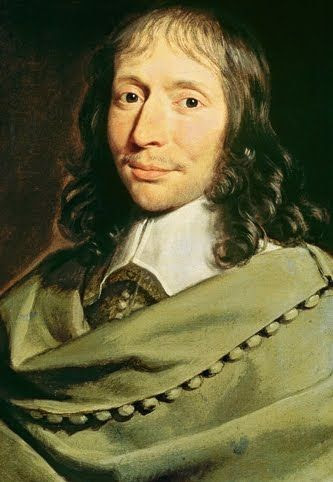
In a new Apostolic Letter released on the day he would
have turned 400, Pope Francis praises the “brilliant and inquisitive mind” of
the French thinker Blaise Pascal.
By Joseph Tulloch
A key theme of Pope Francis’ letter is the “brilliant
and inquisitive mind” of Pascal. A child prodigy, he made important
breakthroughs in mathematics and, at age 19, invented an arithmetic calculator,
a forerunner of the modern computer.
“It is moving,” Pope Francis writes, “to realize that in the last days of his life, so great a genius as Blaise Pascal saw nothing more pressing than the need to devote his energies to works of mercy.”
At a press conference convened to present the
Apostolic Letter, Cardinal Tolentino de Mendonça – the Prefect of the Vatican’s Dicastery for
Culture and Education – stressed that Pope Francis is a “profound admirer” of
Pascal.
The Cardinal noted that the Pope has released (or is
planning to release) a number of such Apostolic Letters, on figures, such as
Dante Alighieri and Saint Therese of Lisieux, whom he judges “beacons” for the
contemporary world.
Pascal, the Portuguese Cardinal said, is one such
beacon, because he “brings everything together”: science and faith, philosophy
and mathematics, spirituality and a practical mindset.
He also stressed that Pope Francis’ letter, as well as
discussing the well-known aspects of the French writer’s life, makes an
original contribution in that it delves into lesser-known territory, such as
his concern for the poor.
In response to a question about Pascal’s association
with Jansenism, a controversial theological movement in the early modern
Church, the Cardinal said that the French writer was “perfectly Catholic.”
[ AR - DE - EN - ES - FR - IT - PL - PT ]

TRAINING TEACHERS IN A CHANGING WORLD
WEBINAR
6TH June – 1pm (Rome)
Prof Jan De Groof
Prof. Cheryl R. Peralta - Philippines
Prof. Theresa Okafor - Africa
Dr. Caroline Healy - UK
The link to the recording:


REVISION DE LA RECOMMANDATION 1974 »
Avec l’évolution du monde actuel dans différents secteurs
ainsi ce comité de l’UNESCO dans son document de travail nous précise en ces
termes en ce qui concerne l’éducation : « Avec l’;expansion
significative de la recherche en éducation et des développements
technologiques, le domaine de l’éducation a également évolué. Les réponses
éducatives aux défis sociétaux sont de plus en plus fondées sur des données
probantes, globales, numériques et intersectorielles, nécessitant une
coopération à travers et entre les sociétés et au-delà des frontières
traditionnelles (territoriales et culturelles). Ces évolutions offrent
également de nouvelles possibilités de consolidation de la paix et de promotion
de la solidarité internationale. Ainsi la révision de la Recommandation
constitue une occasion unique de raviver et d’actualiser le consensus mondial
autour du rôle de l’éducation sous toutes ses formes pour préparer les
apprenants de tous âges et les générations futures à faire face aux chocs
futurs et à façonner des programmes plus justes, durables et sains et un avenir
pacifique. »
C’est une rencontre qui réunit les différents acteurs
dans ce domaine de l’Education en marche vers 2030 « Le comité de
l’Unesco, les Etats membres, et les observateurs. » Ces travaux tenus au
siège mondial de l’UNESCO à Paris ont permis aux participants de se concentrer
sur la nouvelle formulation de la recommandation telle que proposée «
Recommandation sur l’éducation pour la paix. Pour la promotion de la
compréhension et de la coopération internationale, des droits de l’homme, des
libertés fondamentales et du développement durable à travers
l’éducation. ».
Après avoir adopté cette nouvelle proposition, les
participants ont analysé les recommandations du document de travail, les
définitions des termes aux fins de la présente Recommandation, les objectifs et
d’autres aspects. Ce moment a permis de clarifier la compréhension de la
Recommandation. Nous nous permettons de citer les termes et les objectifs de
ce document qui indiqueront notre activité d’éducation :
- Les Termes de définitions : « Education,
compréhension internationale, la culture de la paix, les droits de l’homme et
les libertés fondamentales, l’éducation aux droits de l’homme, l’éducation au
développement durable, l’éducation à la citoyenneté mondiale, l’éducation
transformatrice. »
- Les objectifs : « La capacité d’analyse et le
sens critique, l’aptitude à anticiper, le respect de la diversité, la
conscience de soi, le sentiment d’interdépendance et d’appartenance à une
humanité commune et diverse et à la planète Terre, l’autonomisation, le libre
arbitre et la résilience, l’aptitude à prendre des décisions, l’aptitude à la
concertation, la capacité d’adaptation et la créativité, les compétences en
matière de citoyenneté, les compétences en matière de résolution et de transformation
pacifiques des conflits, l’éducation aux médias et à l’information et les compétences
numériques et de communication.»
A l’issue des
travaux, les orientations seront mises en application dans le monde entier avec
le soutien des Etats, les ONGs, pour une éducation souhaitée pour la formation
de l’Homme intégral, en particulier les enfants et les jeunes. Nous félicitons
et remercions madame Stefania Giannini, les membres de l’UNESCO du Comité organisateur
de cette grande rencontre d’avoir aidé tous les participants à repartir sur des
nouvelles bases de l’Education définie en tenant compte du contexte actuel de
notre monde.
Au terme des avis et considérations, le thème retenu qui
accompagnera plusieurs le domaine de l’éducation pendant plusieurs années est
le suivant : « Recommandation sur l’éducation pour la paix et les droits
de l’Homme, la compréhension et la coopération internationales, les libertés
fondamentales, la citoyenneté mondiale et le développement durable » Nous
soulignons que les travaux de finalisation vont se poursuivre en juillet 2023.
L’UMEC-WUCT se servira des recommandations de l’UNESCO
pour intégrer dans l’élaboration de ses programmes pour marcher ensemble comme
acteurs de l’éducation en soutenant l’importance des objectifs du Programme de
développement durable à l’horizon 2030 des Nations Unies, qui souligne qu’il ne
peut y avoir de développement durable sans paix ni de paix sans développement
durable.
L’Union Mondiale des Enseignants Catholiques (UMEC-WUCT) a participé à ces assises de l’UNESCO avec une grande joie et reconnaissance d’être invitée à ce grand événement mondial dans le domaine de l’éducation qui concerne tout âge. Notre participation a été sous le titre d’Observateur et nous avons été représentés par le Père Albert Kabuge, et Mme Christine Roche, qui ont suivi ses activités avec attention. Pere Kabuge a exprimé que l’ambiance de ces assises était animée d’esprit de famille, d’écoute et d’attention à chaque participant pendant les intervenions.
A cette occasion il remercie le président Professeur Jan De Groof
et son Comité qui ont accordé sa présence, sa participation à ses réunions.

CARDINAL TAGLE
Today, 1 June, His Most Reverend Eminence
Cardinal Luis Antonio Tagle, Pro-Prefect of the Dicastery for Evangelisation,
received the Secretary General of the UMEC-WUCT, Giuseppe Desideri, and
Giovanni Perrone s.a., to discuss issues related to the support of educational
projects presented by realities with special economic needs. His Eminence was
shown the aims of the Union and given documentation on the activities
implemented thanks to the contribution of the Papal Foundation and institutions
that are part of the Union.
Desideri and Perrone had previously met with
Monsignor Roberto Campisi, Councillor of the Secretariat of State, for the same
reasons. With the new provisions of the Papal Foundation, requests for new
contributions will have to be sent by the Apostolic Nuncios of the various
nations.
His Eminence expressed appreciation for the
activities carried out by the Union and assured that he would do his utmost to
make the valuable solidarity work carried out by the Union over the past decade
possible. Unfortunately, in recent years the Dicastery and the Pontifical
Mission Societies have received fewer and fewer resources: on the one hand,
world poverty has increased and on the other, people's generosity has
decreased, also because of the pandemic and wars. A lot of money is spent on
making weapons and less and less money on helping the needy, His Eminence said,
with deep regret.
The serious precariousness in which many
peoples live was discussed, due to educational poverty, food shortages and
serious health situations that mainly affect children.
The Cardinal hoped that in schools in affluent
countries, but also in church communities, education for solidarity and peace
and constant attention - not only in words - for those who suffer would be
renewed and strengthened.
The UMEC-WUCT representatives assured that
they would urge the members of the Union to do more and better.
His Eminence warmly welcomed the invitation to
address the next Council of the Union.
For this year, requests for support and
related projects can be sent to the Union Secretariat for submission to the
Dicastery. For this purpose, the Secretary General will send a letter
specifying the modalities of the planning and submission. Given the economic
difficulties of the Dicastery, the projects will have to be submitted
concerning real needs and not very expensive.
A summary of the projects submitted will be
circulated so that associations, schools and private individuals can also
generously contribute to their implementation.
RENCONTRE AVEC LE CARDINAL TAGLE
Desideri et Perrone avaient déjà rencontré Monseigneur Roberto Campisi, Conseiller de la Secrétairerie d'Etat, pour les mêmes raisons. Avec les nouvelles dispositions de la Fondation pontificale, les demandes de nouvelles contributions devront être envoyées par les nonces apostoliques des différentes nations. Son Éminence a exprimé son appréciation pour les activités menées par l'Union et a assuré qu'il ferait tout son possible pour rendre possible le précieux travail de solidarité mené par l'Union au cours de la dernière décennie. Malheureusement, ces dernières années, le Dicastère et les Œuvres Pontificales Missionnaires ont reçu de moins en moins de ressources : d'une part, la pauvreté mondiale a augmenté et, d'autre part, la générosité des gens a diminué, notamment à cause des pandémies et des guerres. Beaucoup d'argent est dépensé pour fabriquer des armes et de moins en moins pour aider les nécessiteux, a déclaré Son Éminence, avec un profond regret.
La grande précarité dans laquelle vivent de nombreuses
personnes a été évoquée, notamment en raison de la pauvreté éducative, des
pénuries alimentaires et des graves problèmes de santé qui touchent principalement
les enfants.
Le Cardinal a souhaité que dans les écoles des pays
riches, mais aussi dans les communautés ecclésiales, l'éducation à la
solidarité et à la paix et l'attention constante - pas seulement en paroles - à
ceux qui souffrent soient renouvelées et renforcées.
Les représentants de l'UMEC-WUCT ont assuré qu'ils
encourageraient les membres de l'Union à faire plus et mieux.
Son Éminence a accueilli chaleureusement l'invitation à
s'adresser au prochain Conseil de l'Union.
Pour cette année, les demandes de soutien et les projets
y afférents peuvent être envoyés au Secrétariat de l'Union pour être soumis au
Dicastère. A cet effet, le Secrétaire général enverra une lettre précisant les
modalités de planification et de soumission. Compte tenu des difficultés
économiques du Dicastère, il est évident que les projets présentés devront
correspondre à des besoins réels et ne pas être très onéreux.
Un résumé des projets soumis sera diffusé afin que les
associations, les écoles et les particuliers puissent également contribuer
généreusement à leur réalisation.
Precedentemente Desideri e Perrone avevano incontrato, per gli stessi motivi, Monsignor Roberto Campisi, Assessore della Segreteria di Stato. Con le nuove disposizioni della Papal Foundation le richieste di nuovi contributi dovranno essere inviate dai Nunzi Apostolici delle varie nazioni. Sua Eminenza ha espresso apprezzamento per le attività svolte dall'Unione e ha assicurato che farà il possibile per rendere possibile la pregevole attività di solidarietà svolta dall'Unione in quest'ultimo decennio. Purtoppo, negli ultimi anni il Dicastero e le Pontificie Opere Missionarie hanno ricevuto sempre minori risorse: da un lato è aumentata la povertà nel mondo e dall'altro è diminuita la generosità delle persone, anche a causa della Pandemia e delle guerre. Si spendono molti soldi per fabbricare armi e sempre meno soldi per aiutare i bisognosi, ha detto, con vivo rammarico, Sua Eminenza.
Si è
discusso sulla grave precarietà in cui vivono molti popoli, a causa in particolare della povertà
educativa, della carenza alimentare, dei conflitti e delle gravi situazioni sanitarie che
colpiscono principalmente i bambini.
Il
Cardinale auspica che nelle scuole dei Paesi benestanti, ma anche nelle
comunità ecclesiali, si rinnovi e si rinforzi l'educazione alla solidarietà e
alla pace e la costante attenzione - non solo a parole - per coloro che soffrono.
I
rappresentati dell'UMEC-WUCT hanno assicurato che solleciteranno i membri
dell'Unione a fare di più e meglio.
Sua
Eminenza ha accolto con vivo piacere l'invito ad intervenire al prossimo
Consiglio dell'Unione.
Per
quest'anno la richiesta di sostegno e i relativi progetti potranno pervenire
alla Segreteria dell'Unione per essere presentati al Dicastero. A tal fine il
Segretario Generale invierà una lettera per specificare le modalità della
progettazione e dell'invio. Date le difficoltà economiche del Dicastero, è
chiaro che bisognerà presentare progetti riguardanti effettive necessità e non
molto costosi.
Una sintesi
dei progetti presentati sarà diffusa affinché anche associazioni, scuole e
privati possano generosamente contribuire alla loro realizzazione.

offers inspiration
for those who
"inhabit"
social media
"Towards Full Presence" is the title of a
document released by the Dicastery for Communication that offers a pastoral
reflection on people's engagement in the digital world. The publication aims to
generate a dialogue on how to make this ecosystem more human. #FullyPresent
By Vatican News
"Towards Full Presence. A Pastoral Reflection on Engagement with Social Media" (#FullyPresent) is the title of the document published by the Dicastery for Communication on Monday 29 May. The aim of the document is to promote a common reflection on the involvement of Christians in social media, which have increasingly become part of people's lives. Inspired by the parable of the Good Samaritan, the document offers an opportunity to begin a shared reflection on how to promote a culture of being "loving neighbours" also in the digital world.
Looking at the theme within the context of the world of social media, where individuals are often both consumers and commodities, the pastoral reflection seeks a faith-based response. And this response begins with discerning the stimuli we receive and with intentional listening. Attention, together with a sense of belonging, reciprocity and solidarity, are key for creating a sense of unity that should ultimately strengthen local communities, enabling them to become drivers of change. By becoming "weavers of communion" through the creativity of love, we can imagine new models built on trust, transparency, equality, and inclusion, learning to be present in God's style and bearing witness.
Beware of pitfalls on the "digital highways"
The digital revolution has certainly created
opportunities, but it also presents many challenges. The document identifies
several pitfalls to avoid as we travel the "digital highways." From
treatment of individual users as only consumers and commodities, to the
creation of "individualistic spaces" that target like-minded people
or encourage extreme behaviour, the journey through the online environment is
one where many have been marginalised and wounded. For Christians, this begs
the question: how can we make the digital ecosystem a place of sharing,
collaboration and belonging, based on mutual trust?
From awareness to real encounter
Becoming a "neighbour" in the social media
environment begins with a disposition to listen with the awareness that those
whom we meet online are real people. Even in an environment characterised by
"information overload," this openness to intentional listening and of
the heart allows us to move from mere perception of the other to an authentic
encounter. We can begin to recognise our digital neighbour, realising that
their suffering affects us. Our goal then is to build not only
"connections," but encounters that become real relationships and
strengthen local communities.
From encounter to community
In our journey along the "digital highways,"
we can meet others either with a spirit of indifferent bystanders or with a
spirit of encouragement and friendship. In the latter case, we - who are
sometimes the good Samaritan and sometimes the wounded - can begin to help heal
the wounds created by a toxic digital environment. Here we need to rebuild
digital spaces so that they become more human and healthier environments. At
the same time, we can help make these environments more capable of fostering
real communities, based on a person-to-person encounter that is indispensable
for those who believe in the Word made flesh.
A distinctive style
Christians bring to social media a distinctive
"style," one of sharing that has its origin in Christ, who loved us
and gave himself for us with his words, actions, soul and body. He taught us
that truth is revealed in communion and that communication also springs from
communion, that is, from love. The presence of Christians in digital media
should reflect this style that communicates truthful information in a creative
way, one that springs from friendship and builds community. This style often
makes use of stories. It will bring to bear its influence online in a
responsible way, as Christians become "weavers of communion." It will
be reflective, not reactive, and it will be active in fostering activities and
initiatives that promote human dignity. It will also be helping us to open our
hearts and welcome our brothers and sisters.
Witness in the digital world
The presence of Christians in social media will also
bear the mark of witness. Christians are not there to sell a product or
proselytise, but rather to bear witness. They are there to confirm with their
words and their lives what God has done by creating a communion that unites us
in Christ. Whether Christians may find themselves the wounded or the Good
Samaritan, or both, their engagement on social media platforms can be
encounters with neighbours, brothers and sisters, whose lives concerns them
and, therefore, encounters with the Lord. In this way, communication offers a
glimpse of the communion that is rooted in the Holy Trinity, our true
"promised land."
Towards Full Presence


MSG DOLLMANN'S MESSAGE -
Vivre dans le souffle de l’Esprit du Christ
L’Esprit-Saint fait le lien entre Jésus et l’Eglise
Au baptême dans le Jourdain, l’Esprit Saint descendit sur Jésus et la voix de Dieu se fit entendre : « Toi, tu es mon Fils bien aimé ; en toi je trouve ma joie » (Lc 3,22). En accueillant l'Esprit dans son humanité, Jésus l'a rendue digne de Dieu. Par sa mort et sa résurrection, Jésus lui a définitivement ouvert l’accès à la vie divine en brisant les verrous du mal et de la mort. Ainsi, le jour de la Pentecôte, .......ng in the breath of the Spirit of Christ
At the baptism in the Jordan, the Holy Spirit descended
on Jesus and the voice of God was heard: "You are my beloved Son; in you I
rejoice" (Lk 3:22). By welcoming the Spirit into his humanity, Jesus made
it worthy of God. By his death and resurrection, Jesus definitively opened her
access to divine life by breaking the locks of evil and death. Thus, on the day
of Pentecost, filled with the Holy Spirit, St. Peter could testify: "He
was exalted by the right hand of God and received from the Father the Holy
Spirit, the object of the promise, and poured him out on us" (Acts 2:32).
(Acts 2:32). Jesus' baptism foreshadowed our own, the baptism in the Spirit
that opens us to a relationship of knowledge and love with God......
El Espíritu Santo une a Jesús y a la Iglesia
En el bautismo en el Jordán, el Espíritu Santo descendió
sobre Jesús y se oyó la voz de Dios: "Tú eres mi Hijo amado; en ti me
alegro" (Lc 3,22). Al acoger al Espíritu en su humanidad, Jesús la hizo
digna de Dios. Con su muerte y resurrección, Jesús le abrió definitivamente el
acceso a la vida divina, rompiendo los cerrojos del mal y de la muerte. Así, el
día de Pentecostés, lleno del Espíritu Santo, san Pedro pudo atestiguar:
"Fue exaltado por la diestra de Dios y recibió del Padre el Espíritu
Santo, objeto de la promesa, y lo derramó sobre nosotros" (Hch 2,32).
(Hechos 2:32). El bautismo de Jesús prefiguró el nuestro, el bautismo en el
Espíritu que nos abre a una relación de conocimiento y amor con Dios......
Lo Spirito Santo unisce Gesù e la Chiesa
Al battesimo nel Giordano, lo Spirito Santo scese su Gesù
e si udì la voce di Dio: "Tu sei il mio Figlio prediletto, di te mi
rallegro" (Lc 3,22). Accogliendo lo Spirito nella sua umanità, Gesù l'ha
resa degna di Dio. Con la sua morte e risurrezione, Gesù le ha definitivamente
aperto l'accesso alla vita divina, rompendo i lucchetti del male e della morte.
Così, il giorno di Pentecoste, pieno di Spirito Santo, San Pietro poté
testimoniare: "Fu esaltato alla destra di Dio e ricevette dal Padre lo
Spirito Santo, oggetto della promessa, e lo effuse su di noi" (At 2,32).
(Atti 2:32). Il battesimo di Gesù prefigura il nostro, il battesimo nello
Spirito che ci apre a una relazione di conoscenza e di amore con Dio. ....
MESSAGE de MSG DOLLMANN - fr-en-es-it


Cette école catholique, reconnue d’Etat, offre des parcours d’enseignement Secondaire. Elle a été fondée il y a trente ans, donc après la réunification, dans la partie est de l’Allemagne. Elle a su établir et maintenir un profil catholique authentique dans un environnement anciennement communiste et encore reconnu athée aujourd’hui. L’école prend clairement position pour une vision judéo-chrétienne de l’homme, crée à l’image de Dieu, voulu et aimé par Dieu et porteur d’une dignité indestructible.
Elle cherche à former et éduquer ses élèves dans ce sens,
en les sensibilisant aux questions fondamentales de la vie et en leur proposant
des réponses adéquates. En tant qu’école épiscopale elle crée un environnement
qui aide à former et à développer leur conscience. Elle les encourage
La mise en œuvre de cette vision intégrale est témoignée par une variété d’activités volontaires : du sport, de la musique, des fêtes scolaires, des activités culturelles et religieuses.
L’existence-même de cette école semble témoigner d’un clin d’œil de l’Esprit Saint : bien que localisée dans un environnement qui était longtemps dépourvu de tout référence au christianisme, elle démontre qu’une éducation basée sur la vision catholique de l’être humain peut réussir et rayonner.
Verein katholischer deutscher
Lehrerinnen e. V. (VkdL)
Bundesgeschäftsstelle / Siège central - Hedwig-Dransfeld-Platz 4
45143 Essen
Germany / Allemagne
Téléphone : +49 (2 01) 62 30 29 - Téléfax : +49 (2 01) 62 15 87,
courriel : sekretariat@vkdl.de
Website: www.vkdl.de


